Essential oil diffusers and blends make it easy to scent your home naturally and intentionally.
From selecting the right diffuser to discovering seasonal blends that bring warmth and ambiance to your space, this hub brings together all our best diffuser content in one easy-to-navigate location.

What You’ll Find in This Diffuser And Blends Hub
This page is your go-to resource for all things related to essential oil diffusers and blending essential oils. is designed to help you feel confident using essential oil diffusers, whether you’re just getting started or looking for fresh blend ideas.
Here’s what we’ve gathered for you:
- Diffuser types and how they work – Understand which diffuser suits your needs
- How much essential oil to use – Get the ratios right every time
- Room-by-room diffuser ideas – Create the perfect atmosphere in every space
- Seasonal and holiday diffuser blends – Enjoy scents that match the time of year
- Beginner-friendly blending tips – Build confidence in creating your own combinations
Whether you’re setting up your first diffuser or looking to expand your collection of blends, you’re in exactly the right place.
Table of Contents
Essential Oil Diffuser Basics
Understanding how diffusers work and how to use them properly will help you get the most enjoyment from your essential oils while keeping your diffuser running smoothly for years to come.
Types of Essential Oil Diffusers
There are a few different types of aromatherapy diffusers. Each type works differently from the others.
The most common options include:
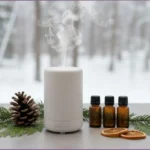
Ultrasonic Diffusers – These are the most popular choice for home use. Ultrasonic devices use water and ultrasonic vibrations to create a fine mist that disperses essential oils into the air. These are quiet, affordable, and add a touch of humidity to your room – perfect for dry winter months.
Nebulizing Diffusers – Nebulizers don’t use water at all. Instead, they use pressurized air to break essential oils into tiny particles. These deliver a stronger scent and are ideal for larger spaces, though they do use oils more quickly. They’re a great choice if you want pure, undiluted aromatics.
Passive Diffusers – Passive devices work by letting essential oils evaporate naturally into the air. This makes them simple, quiet, and low-maintenance. Common passive diffusers include reed diffusers, ceramic diffusers, lava stone, and diffuser jewelry.
Reed Diffusers – A type of passive diffuser that requires no electricity, reed diffusers combine form and function. Essential oils travel up wooden reeds and scent your space continuously. They’re wonderful for small areas like bathrooms or entryways where you want a subtle, constant fragrance.
Portable Diffusers – Small, easy to carry, and often run on batteries or USB power, portable diffusers are designed for scent on-the-go. Some portable models use ultrasonic mist with a small water tank, while others are evaporative and use a pad or wick. They are best when you want flexibility and a light, personal scent in a small area.
Heat diffusers and evaporative diffusers – Heat diffusers warm the oil to release its scent, while evaporative diffusers use a fan to blow air through a pad containing essential oils. While both are budget-friendly and portable, they are less effective. This is because they alter the oil’s natural properties slightly due to heat or rapid evaporation.
How To Use A Diffuser Safely
Using an aromatherapy diffuser is straightforward, but a few simple practices will help you enjoy it safely.
Always place your diffuser on a stable, water-resistant surface away from electronics and direct sunlight.
Start with less oil than you think you’ll need. You can always add more, but too much can be overwhelming, especially in smaller rooms or shared spaces.
If you’re diffusing around children or pets, keep sessions shorter – about 30 minutes to an hour – and ensure the room is well-ventilated.
Never leave your diffuser running all day. Most experts suggest diffusing for intervals of 30-60 minutes, then give your space a break. This prevents scent fatigue and is easier on both you and your diffuser.
Most ultrasonic diffusers hold between 100ml and 500ml of water, and you’ll typically add 3-5 drops of essential oil per 100ml of water.
How Long Should You Diffuse Essential Oils?
The ideal diffusing time depends on your space and purpose. Regardless, it is advisable to take breaks between sessions.
For general home scenting, 30-60 minutes is usually enough. This gives you the aromatic benefits without overwhelming your senses.
Many diffusers have automatic shut-off timers, which is a helpful safety feature.
In bedrooms, you might diffuse for 30 minutes before sleep, then let the diffuser turn off automatically. In larger living areas, you can diffuse for up to an hour, take a break, then diffuse again later if desired.
Always give your nose a rest between sessions.
How to Clean and Maintain a Diffuser
Regular cleaning keeps your diffuser working properly and prevents scent buildup.
After every 5-6 uses, take a few minutes to clean your diffuser properly. Empty any remaining water, then fill the reservoir about halfway with clean water. Add a teaspoon of white vinegar, run the diffuser for 5 minutes, then empty and wipe clean with a soft cloth.
For the exterior, simply wipe with a damp cloth. Avoid harsh chemicals that might damage the plastic or affect future blends.
If you notice a buildup of oil residue, use a cotton swab dipped in rubbing alcohol to gently clean hard-to-reach areas.
Regular cleaning prevents old oils from mixing with new blends and keeps your diffuser’s mist output strong. It’s a small habit that makes a big difference.
Read this detailed guide on how to clean an aromatherapy diffuser.
Browse Diffuser Blends
Ready to explore blend ideas? Use these categories to find exactly what you’re looking for, whether you need something calming for the evening, energizing for your morning routine, or perfectly suited to the season.
Filter by mood and occasion:
- All Blends
- Relaxing
- Energizing
- Focus & Clarity
- Seasonal
- Holiday
- Everyday Diffuser Blends
Simple, versatile blends are the foundation of a good aromatherapy practice.
These everyday combinations are designed for regular use and create a welcoming atmosphere in any room.
They’re uncomplicated, use commonly available oils, and work beautifully throughout the year.
Fresh & Clean Blends
Fresh & Clean blends bring an airy, purified feeling to your home and are especially recommended for shared spaces.
Try combining lemon, peppermint, and eucalyptus for a crisp, invigorating scent that works beautifully in kitchens and bathrooms.
Another favorite is grapefruit with tea tree and a touch of rosemary – uplifting and clean without being overpowering.
Calm Evening Blends
Calm and soothing, these blends help you transition from the busyness of the day into a more relaxed state.
Blending lavender and cedarwood is a classic pairing that never disappoints.
Add a drop of chamomile for extra gentleness, or try bergamot with ylang-ylang for a more floral evening blend. These are perfect for unwinding at the end of the day.
Uplifting Morning Blends
Cheerful and energizing, uplifting morning blends set a positive tone for the day ahead.
Sweet orange combined with peppermint creates a cheerful, awakening atmosphere.
A blend of grapefruit and rosemary is another energizing option, while lemon and basil bring herbal brightness to your morning routine. Diffuse these blends while enjoying your morning coffee or getting ready for the day.
Seasonal Diffuser Blends
Scent has a remarkable way of marking time and celebrating the unique character of each season. Seasonal blends let you bring the outdoors in and create an atmosphere that reflects the natural world around you.
Spring Diffuser Blends
Spring calls for light, fresh scents that mirror the renewal happening outside.
Citrus and mint combinations capture that feeling perfectly – think lemon with peppermint and a touch of basil.
Floral blends using geranium, lavender, and sweet orange bring the essence of blooming gardens indoors. For something herbaceous and green, try rosemary, lemon, and clary sage.
Spring diffuser blends work wonderfully during spring cleaning sessions or when you’re opening windows for the first time after a long winter. They’re bright without being heavy, fresh without being cold.
Summer Diffuser Blends
Summer blends should feel breezy, vibrant, and energizing.
Tropical-inspired combinations using lime, coconut (if using fragrance oils), and sweet orange create a vacation-like atmosphere.
Citrus and herb pairings like grapefruit with basil and peppermint bring garden-fresh energy indoors.
For hot afternoons, try peppermint with eucalyptus and a hint of lime – cooling and refreshing.
Summer diffuser blends are ideal for diffusing during summer gatherings or lazy weekend mornings when you want your home to feel bright and welcoming.
Autumn Diffuser Blends
As the weather cools, our scent preferences naturally shift toward warmer, spicier aromas.
Spice blends featuring cinnamon bark (use sparingly), clove, and sweet orange create that cozy autumn feeling.
Woodsy combinations using cedarwood, frankincense, and a touch of wild orange bring the essence of autumn forests indoors.
Don’t forget apple-inspired blends: cinnamon, clove, and a citrus oil like mandarin recreate the scent of fresh apple cider without any synthetic fragrances.
Autumn essential oil blends are perfect for diffusing while baking or enjoying autumn evenings at home.
Winter Diffuser Blends
Winter blends should feel enveloping, warm, and comforting. Evergreen combinations using pine, cypress, and cedarwood bring the outdoors in and work beautifully throughout the season.
Warming spice blends featuring cinnamon, clove, and vanilla (if available as an absolute or extract) create that hygge feeling everyone craves in winter.
For quieter winter evenings, try frankincense with myrrh and a touch of sweet orange – grounding and contemplative. Or blend cedarwood with lavender and bergamot for a calming winter blend that feels both cozy and serene.
Holiday Diffuser Blends
Holiday scenting deserves its own category because these blends are intentional, celebratory, and often tied to cherished traditions. The right holiday blend can transform your entire home and create lasting scent memories.
Christmas Diffuser Blends
Nothing says Christmas quite like the scent of evergreens and warm spices.
Classic Christmas blends combine pine or fir needle essential oil with cinnamon bark and sweet orange. Add a touch of clove for extra depth, or include frankincense for a more contemplative holiday atmosphere.
Gingerbread-inspired blends use cinnamon, ginger, clove, and vanilla to recreate that beloved holiday bakery scent.
Remember to use cinnamon and clove oils sparingly – they’re very potent. For a fresh twist, try peppermint with vanilla and a hint of cedarwood, reminiscent of candy canes and winter forests.
Festive Winter Holiday Blends
Beyond Christmas, winter holidays call for scents that feel celebratory and warm.
Cranberry orange blends can be approximated using sweet orange, a touch of clove, and cedarwood.
Mulled cider blends combine cinnamon, clove, sweet orange, and a hint of ginger.
For New Year’s celebrations, try uplifting citrus blends with champagne-like brightness: grapefruit, lemon, and bergamot with a touch of peppermint creates a sparkling, celebratory atmosphere perfect for welcoming the year ahead.
Suggested internal link: Everyday Essential Oil Diffuser Blends
Room-by-Room Diffuser Ideas
Different rooms serve different purposes, and your diffuser blends can enhance each space’s unique function. Here’s how to choose scents that complement how you actually use each room.
Living Room Diffuser Blends: Welcoming & balanced
Your living room is where you gather, entertain, and relax. Choose blends that are welcoming but not overpowering. For everyday use, try lavender with sweet orange and cedarwood – calming yet friendly. When entertaining, opt for fresh blends like lemon, rosemary, and peppermint that feel clean and inviting.
For cozy evenings, diffuse frankincense with bergamot and a touch of sandalwood. This creates a warm, contemplative atmosphere perfect for reading or quiet conversation.
Bedroom Diffuser Blends: Soft, Calming Aromas
Bedrooms benefit from gentle, calming scents that support rest and relaxation. Classic bedtime blends include lavender and cedarwood, or chamomile with bergamot. For a more floral approach, try ylang-ylang with lavender and a hint of sweet orange.
Remember to diffuse for 30-60 minutes before sleep rather than all night long. Your bedroom should smell pleasant but not strong, allowing you to drift off naturally without the scent overwhelming your senses.
Bathroom Diffuser Blends: Clean, Fresh Scent Profiles
Bathrooms are perfect for fresh, clean scents or spa-like blends. Spa-inspired combinations using eucalyptus, peppermint, and lavender transform your bathroom into a retreat. Fresh and clean blends featuring lemon, tea tree, and rosemary keep the space smelling bright.
A reed diffuser works particularly well in bathrooms, providing continuous, gentle scenting without electricity. Try eucalyptus and lemon for an effortlessly fresh bathroom atmosphere.
Entryway Diffuser Blends: Light, Inviting Blends
Your entryway creates the first impression of your home. Choose scents that are welcoming and seasonally appropriate. Year-round welcoming blends include sweet orange with cinnamon and clove (very lightly) or lemon with lavender and rosemary.
Seasonal entryway scents might include pine and peppermint in winter, or grapefruit and basil in summer. Keep the scent moderate – you want guests to notice it pleasantly, not be overwhelmed the moment they walk in.
Home Office Diffuser Blends: Focus-Friendly Aromas
Home offices benefit from blends that support focus and mental clarity without being distracting. Concentration blends featuring rosemary, peppermint, and lemon are classics for good reason. Energizing work blends might include grapefruit, basil, and a touch of peppermint.
For afternoon energy dips, try refreshing combinations like eucalyptus, lemon, and peppermint. Diffuse for 30-45 minutes during focused work sessions, then take a break to keep your mind fresh.
Popular Diffuser Guides & Blends
Looking for more inspiration? These are our most-loved diffuser resources, combining practical guides with creative blend ideas that our community returns to again and again.
How to Choose Your First Essential Oil Diffuser – a complete beginner’s buying guide
- Best Essential Oil Blends for Beginners – simple combinations using common oils
- Seasonal Diffuser Blend Calendar – month-by-month scenting ideas
- Deep Cleaning Your Diffuser: The Complete Guide – maintenance made simple
- Creating Signature Scents for Your Home – develop your own custom blends
- Diffuser Blends for Small Spaces – apartment-friendly aromatherapy
Beginner Tips for Creating Diffuser Blends
Creating your own diffuser blends is easier than you might think, and it’s one of the most enjoyable aspects of working with essential oils. Once you understand a few basic principles, you’ll feel confident experimenting with combinations that suit your personal preferences.
Understanding Top, Middle, and Base Notes
Essential oils are often categorized by their evaporation rate, which affects how quickly you’ll smell them and how long they last in a blend.
Top notes are the bright, light scents you notice first – citrus oils like lemon, grapefruit, and bergamot. They’re uplifting and energizing, but evaporate quickly.
Middle notes form the heart of your blend. Florals like lavender and geranium, or herbaceous oils like rosemary and clary sage, fall into this category. They appear after the top notes and help bridge the blend together.
Base notes are deep, grounding scents that last longest. Think cedarwood, sandalwood, frankincense, and patchouli. They anchor your blend and help the lighter notes last longer.
A balanced blend typically includes oils from each category, though this isn’t a strict rule. A simple formula to start with: 3-4 drops top note, 2-3 drops middle note, 1-2 drops base note. Adjust based on your diffuser size and personal preference.
How Many Drops to Use In A Diffuser
The number of drops you use depends on your diffuser’s water capacity and the size of your room.
For a 100ml diffuser, start with 3-5 total drops.
- For 200ml, use 5-8 drops.
- Larger 300-500ml diffusers can handle 8-12 drops.
Begin conservatively. It’s much easier to add another drop or two than to dilute an overpowering blend.
Stronger oils like peppermint, eucalyptus, cinnamon, and clove need less – sometimes just 1-2 drops in an entire blend.
This detailed explanation of how many drops to use in a diffuser can help you make the right choice for your type of device.
Balancing Citrus, Floral, and Woody Oils
Different oil families have different strengths and characteristics. Citrus oils are cheerful and energizing, but can dominate a blend if you’re not careful. They pair beautifully with herbs and woods. Try sweet orange with rosemary and cedarwood for a balanced, welcoming blend.
Floral oils vary widely in intensity. Lavender is gentle and blends with almost anything. Ylang-ylang and jasmine are much stronger and need a light hand. Start with just one drop of intense florals, especially in smaller diffusers.
Woody oils provide grounding depth. Cedarwood is mild and versatile, while sandalwood is richer and more precious. Woods balance bright citrus beautifully and soften sharp herbaceous oils.
When to Keep Blends Simple
Some of the best diffuser blends use just 2-3 oils. Don’t feel pressure to create complex combinations. Lavender and lemon is wonderfully refreshing. Peppermint and sweet orange is energizing and bright. Frankincense and bergamot is calming and sophisticated.
Simple blends are also easier to replicate and adjust. Once you find a two-oil combination you love, you can add a third oil to modify it slightly – perhaps adding cedarwood to lavender and lemon for a more grounding effect.
As you gain confidence, you’ll develop an intuition for what works together. Keep notes of combinations you try, including the number of drops. This helps you remember favorites and learn from less successful experiments.
Related resources: Explore our Essential Oil Uses guide for more information on individual oils, or visit Aromatherapy Basics to deepen your understanding of scent families and blending principles.
A Note on Safe Diffuser Use
Diffuser blends are intended for creating a pleasant home atmosphere and bringing enjoyment to your everyday spaces. Always follow your diffuser manufacturer’s instructions for proper use and maintenance. When diffusing in shared spaces, be mindful of others’ scent preferences and sensitivities.
Essential oils are potent botanical extracts that should be used thoughtfully. If you’re new to diffusing, start with shorter sessions and milder oils, then gradually explore stronger scents as you become familiar with what works best in your home.
Essential Oil Diffuser FAQs
How many drops of essential oil should I use in a diffuser?
Most diffusers work well with 5–10 drops total. The exact number of drops will depend on the size of the diffuser and the room.
How often should I clean my diffuser?
Light cleaning after each use and a deeper clean once a week will keep your diffuser performing efficiently and also maintain scent quality.
How long should I run my diffuser?
Most experts recommend diffusing in 30–60-minute intervals rather than continuously all day. This intermittent approach prevents scent fatigue. It also extends your diffuser’s longevity.
Can I use my diffuser in the bedroom while sleeping?
It’s better to diffuse for 30-60 minutes before sleep, then let the diffuser shut off automatically rather than running it all night. This gives you the aromatic benefit while falling asleep without overexposing yourself to essential oils while sleeping. Choose gentle oils like lavender, chamomile, or cedarwood for bedroom diffusing.
Are diffuser blends beginner-friendly?
Absolutely. Many diffuser blends use just two or three oils and are easy to adjust based on personal preference.
Can I mix different essential oils together?
Yes. Mixing essential oils is common in diffuser blends, especially when using complementary scent profiles.
Continue Your Aromatherapy Journey
Ready to explore more ways to bring essential oils into your daily life? Discover complementary resources that will expand your aromatherapy practice:
DIY Bath, Body & Home – Create your own natural products using essential oils
Essential Oil Uses – Learn about individual oils and their unique characteristics
Aromatherapy Basics – Build your foundational knowledge of essential oils and scent
Carrier Oils & Infused Oils – Essential information for making topical products using essential oils
Your diffuser is just the beginning of a wonderful aromatherapy practice that can enhance every corner of your home and daily routine. Enjoy the journey!